Entrepreneurship programs,
designed and delivered.
We build and run entrepreneurship programs for NGOs, governments and development banks — cohort selection, curriculum, trainers, delivery on the ground, and the numbers your funder will accept.
One of them is documented in a published World Bank report, co-authored by our co-founder.
We will tell you when your programme should be smaller.

What the engagement gives you. Programme volume — businesses digitised, entrepreneurs trained, countries delivered in — sits in section 12 with the client work, where it evidences capability instead of opening with our own output.
Attendance is easy to count.
It is the thing you are least buying.
Three ways an entrepreneurship programme reports a good year and leaves nothing behind. You have probably sat in the steering committee for one of them.
The certificate problem
You funded four thousand seats, and at the end you can report four thousand seats. Nobody in the room can say how many of those people now hold a bank account, a payment gateway, a listed catalogue or a single order — because attendance was the only thing anyone was asked to record. The programme was measured where measuring was easy, and nobody was funded to measure where it mattered.
The pilot that will not scale
A hundred businesses in a pilot get a trainer who remembers their names. Four thousand get a slide deck and a helpline. Every operational shortcut that was invisible at pilot size — manual onboarding, a trainer who improvises, a spreadsheet holding the cohort — becomes the constraint, and the quality drop shows up in month nine when the reporting is already committed.
The capability that leaves with the consultant
The curriculum lives in a firm's template library. The trainer guide is a set of notes nobody wrote down. The platform is on a licence in the vendor's name. When funding ends, the programme does not hand anything over — it stops, and the next round starts from a blank page and a new procurement.
All three have the same root. The programme was designed around what could be delivered, and then measured around what could be counted. Nobody designed it around what had to be true eighteen months later.
Every part below has run
in a named programme.
This is not a capability list. Each line names the programme it ran in, so you can check it before the call rather than after the contract.


A programme is a cascade.
Most proposals only
price the top of it.
Applications are not participants. Participants are not businesses. Businesses are not sellers. Every step loses people, and the only question that matters is whether you agreed the losses in advance or discovered them in the final report.
Here is one, in full, with the numbers the World Bank published.
Read it the uncomfortable way
Twenty-one per cent of the people who applied got hands-on support. Of the seventy producers taken through the full design cohort, thirty sold. Under half.
We publish that ratio because the alternative is worse. A programme that reports only its top line trains a funder to expect a number that no honest delivery partner can hit, and the next tender is written against it.
And the way that pays for it
Those thirty producers sent JD 217,000 of business-to-business price offers through the platform, against JD 15,000 of direct sales — the pipeline was fourteen times the till.
That is the argument for the marketplace. A training programme produces trained people. A programme with a market attached produces buyers asking for prices, which is the only leading indicator worth reporting to a board.
Put your cohort
through the same cascade.
The sliders start on the rates the Jedad programme actually produced. Move them to your own context — and move them for a reason you could defend to a funder.
Defaults from the published report: 400 of 1,946 supported, 50 of 400 one-to-one. The 43% is 30 of 70 in the design cohort — applying that rate to the whole supported group is the optimistic reading, and we have left it there so you can be the one to lower it.
| Applications received | 1,950 |
|---|---|
| Funded for hands-on support | 410 |
| One-to-one mentoring | 53 |
| Workshops and group sessions | 357 |
| Applicants who get nothing | 1,540 |
| Businesses trading at the end | 176 |
That is 9% of the people who applied. Every entrepreneurship programme has a number here. Most funders are never shown it.
Arithmetic only — it applies your rates to your cohort size. It is not a forecast of your programme, and we would not put one in a proposal without a diagnostic first.
The last one is on
worldbank.org.

Development work is full of delivery partners whose results exist only in their own deck. This one was written up, peer-read and published by the client, under Public Disclosure Authorized, where anyone can pull it and check every figure on this page.
- Published by the World Bank — a project report with a document number, not a testimonial.
- Our co-founder is a named co-author, alongside two World Bank economists and a fourth author.
- Every Jedad figure on this page comes from it, with the section noted, so nothing here depends on trusting us.
- It records what did not work too — the programme was stopped by COVID-19 in early 2020 with its GCC pipeline still open. That is in the report, and we are not going to leave it out here.
Umbrella500's approach was both strategic and practical — bridging vision with execution. The programme created real, measurable outcomes for our beneficiaries.
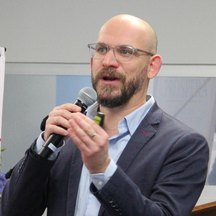 Giacomo De GiorgiSenior Consultant · The World Bank
He is also the second author on the report above. The quote and the publication are the same person's assessment, which is the reason to print both.
Four thousand families is not
a bigger workshop. It is a pipeline.
The Social Development Bank came to us with over four thousand Saudi families running home businesses and no digital presence. Doing that one engagement at a time takes years nobody has, so store creation was built as a production line rather than a series of projects.
One onboarding path for four thousand families
A single repeatable route from enrolment to a live storefront, with the same checkpoints for every family. The variance that kills a programme at scale is the variance between delivery staff, and a fixed path removes most of it.
Curriculum that front-loads the decisions
Every owner faces the same handful of irreversible choices — what to sell, how to price it, how to take payment, how it gets delivered. Putting those first means the store gets built once.
Training and building run in parallel
1,670 hours of training were delivered while the stores were being created. An owner who has just decided her pricing is the one who should be setting it up that week.
Supervision as a named role
Team coordination across the full delivery period was a person's job rather than an assumption. At this volume, the programme fails where nobody owns the queue.
- 4,100+Families trained
- 3,525Fully functional stores delivered
- 70%Of trainees were women
- 1,670Training hours delivered
Masar 3500, with the Social Development Bank and MakanE, Saudi Arabia, 2023–2024. Participants completed 1,750+ orders and generated 523,000 SAR in sales in the first three months.

Four cases where
we are the wrong partner.
Said here rather than on the call, because you should be able to disqualify us without spending an hour.
- The funder requires a name on the cover. Some tenders are decided by the brand of the firm delivering them. We are a small senior team, and if the evaluation grid awards points for global headcount, a large consultancy will score higher than us and you should let them.
- You need a hundred trainers in the field next month. We design programmes and deliver them with a senior team, sometimes alongside trainers we recruit and manage. We are not a staffing agency, and a programme needing bodies at that speed needs one.
- You need research rather than delivery. Baseline studies, randomised evaluation design and impact econometrics are a different discipline. The Jedad work sat next to that discipline — it did not replace it, and its own report says the impact evaluation was never funded.
- The programme has to launch in three weeks. A validated curriculum took ten weeks on the SPARK build, and that was fast. Anything materially quicker is a slide deck with modules written on it, and you will find out in month four.
Umbrella500 is the only partner we found that blended business strategy, e-commerce execution, and not-for-profit empathy.
 Halil Can EmreProject Manager · SPARK Türkiye
The three things in that sentence are the reason to pick us and the reason not to. A team that can do all three is small, and a small team is the wrong answer to some of the four cases above.
Who actually writes
the curriculum, and who
is in the room?
Every entrepreneurship programme is delivered one of four ways. They differ less on price than on where the knowledge sits when the funding stops.
In-house team
The knowledge stays, if the people do.
Your own staff design and deliver. Cheapest per cohort once it is running, and the capability is genuinely yours — but you carry the hiring, the ramp-up and the first cohort's mistakes, and the whole thing walks out with two resignations.
Choose it if you will run this programme more than three times and can hire ahead of the first one.
Training vendor
Fast, cheap, and it stops at the certificate.
A per-seat provider delivers a standard course to your cohort. Predictable to procure and easy to report. Nobody in that model is accountable for whether a business exists at the end, because nobody was asked to be.
Choose it if the mandate really is awareness and reach, and the funder is measuring participants.
Global consultancy
Strategy at the top, subcontractors at the bottom.
Strong on design, governance and reporting, and a name your board already trusts. Delivery is usually subcontracted, so the people in the room with your beneficiaries are not the people who wrote the method or answered your RFP.
Choose it if the evaluation criteria reward institutional scale, or the programme spans more countries than one senior team can be present in.
Umbrella500
The people who designed it are the people delivering it.
We write the curriculum, build the platform, train the trainers and stand in the room. Small enough that the founders are on the programme, which is the advantage and the constraint — read the four cases in the section above before you decide.
Choose us if the outcome you have to report is businesses that still trade after the funding closes.
We have been the subcontractor in the third model. It is a reasonable way to run a large multi-country programme, and if that is what you are procuring you should procure it properly rather than pretend a team of our size is an alternative.
Riskiest thing first,
every time.
The sequence below is not a Gantt chart with our name on it. It is ordered so that the assumption most likely to be wrong is tested while there is still budget to act on the answer.
Screening comes before curriculum, because a cohort you have not met is an assumption with a syllabus attached.
Three clients.
Four programmes.
All named.
No anonymous “leading development organisation” on this page. Each of the three below is a client we can name, with a case study you can read and, in one case, a report the client published themselves. The fourth programme is a second one for SPARK.
The World Bank · Jordan
Jedad — an Arabic B2B marketplace for refugee and host-community businesses, with product design support, mentoring and a published toolkit. Sections 5, 7 and 12 of this page come from that programme.
- Marketplace
- Design mentoring
- Published report
SPARK · Türkiye
A thirteen-module e-commerce curriculum in Arabic and Turkish, built in ten weeks. 1,315 refugees certified and 381 live stores launched, at an average of $192 a month per store.
- Curriculum
- Bilingual
- 100% satisfaction
Social Development Bank · Saudi Arabia
Masar 3500, with MakanE. The onboarding pipeline and the curriculum behind it — the volume engine described in section 8.
- National scale
- Home businesses
- Women-led
A fourth, still running: the SPARK Innovation Hub — six weeks to launch, 500+ organisations onboarded, and a three-year partnership that followed. Anyone can open it right now; it is the second screenshot in section 4.
What the work looks like when it lands
Programme photographs are easy to stage. Product outcomes are not — either the thing a maker sells changed, or it did not.


Every image in this section is a figure from the World Bank's published report. No mockups, no stock photography, no reconstructions.
Programme volume, 2019—2026
Each figure is the sum of documented projects, rounded down. 5,000+ is 5,406 across the World Bank, Masar 3500 and SPARK. 6,500+ is 6,915 across the same three. The two overlap in population by design and are never published alongside a third reach metric.
The ones that decide it.
What exactly do we own at the end?
The curriculum and every module in it, the trainer guide, the templates and trackers, the recorded sessions, and the platform if we built you one — source included. On the Jedad programme the toolkit for rebuilding the platform was published openly, which is the strongest version of this commitment we can point at.
What you do not get is our team's future availability. If you want us delivering the next round, that is a new engagement, and we would rather say so now than have it discovered at handover.
Can you work under our monitoring and evaluation framework?
Yes, and we would rather see it before the curriculum is written than after. The indicators a funder has already agreed determine what has to be instrumented, and instrumenting after delivery has started means reconstructing numbers instead of counting them.
Where your framework asks for something the programme cannot honestly produce — attributed income change without a control group, for instance — we will tell you during design rather than at reporting.
How much of the delivery is your own team, and how much is recruited?
Design, curriculum and the platform are ours. Specialist delivery — design mentors, sector experts, local trainers — is recruited and managed by us against the cohort's actual composition. On the Jedad programme we ran a market search to find a design firm capable of the product work, and then managed them through the intervention.
You get one contract and one accountable party. You do not get the pretence that four people can be in nine governorates at once.
We already have a curriculum. Can you just deliver it?
Sometimes. We will read it first, and if it is sound we will deliver it and say so. If it stops at business-plan writing — which most do — delivering it faithfully would mean taking your money to produce business plans, and we will tell you that before quoting.
What happens if the cohort turns out to be different from the proposal?
It usually is, which is why screening sits before curriculum build in the sequence above rather than after it. On the Jedad programme, two thousand interviews and a screener ran before the cohort was fixed, and what came back changed the intervention design.
If the difference is large enough to change the budget, that is a conversation in week four rather than a variation order in month seven.
Can you deliver in Arabic?
Arabic is where we start. The team is based in Amman, the SPARK curriculum was authored bilingually in Arabic and Turkish rather than translated afterwards, and the Jedad platform was built in Arabic specifically because the international marketplaces offered no Arabic support to the people expected to use them.
Do you take on programmes outside the Middle East?
We have delivered across Iraq, Jordan, Lebanon, Saudi Arabia and Türkiye, and we have an office in Luxembourg. Outside that footprint we would be learning your market on your budget, and there is usually a local partner who should lead with us supporting rather than the reverse.
How do we start?
A thirty-minute call about the mandate, the funder and the timeline. If there is a fit we will propose a short diagnostic before any programme design is quoted, because quoting a curriculum before meeting the cohort is how the certificate problem starts.
Tell us what the funder
is asking for.
Most of our programmes start with a conversation rather than a tender. Send the scope if you have one, or the mandate and the deadline if you do not — we answer in a day, usually less.
Or write directly: [email protected]